House Clearance in Chalfont Saint Giles

House clearance in Chalfont Saint Giles should feel organised, respectful and practical, especially when a property holds a mixture of furniture, household contents and items that need sorting before they can be removed. We provide a straightforward service focused on clearing domestic spaces in a way that helps the property move forward, whether that means a full clearance, a partial clearance or help with specific rooms. The work is planned around what needs to leave, what should stay and how to handle items that require careful separation.
Our house clearance service covers the removal of general household items, furniture and mixed contents from homes and residential properties. For customers with a straightforward interior to clear, this can include rooms, storage spaces and awkwardly filled areas that need a tidy, methodical approach. It is a practical option when you want the main items removed without turning the job into a series of separate arrangements for each type of content.
We also support wider domestic clearances where the property needs to be emptied more fully and the remaining contents sorted into sensible categories. That can suit moves, property changes, inherited homes or long-standing clutter that has built up across several rooms. Clear planning matters here, because a well-run clearance reduces disruption and helps the process feel controlled rather than rushed.
What a house clearance can cover
A house clearance is not limited to one room or one kind of item. It often involves a combination of furniture, small household goods, kitchen contents, soft furnishings, books, ornaments and stored possessions that need to be removed in a single, organised visit. Some properties also include items in lofts, garages or cupboards that are easy to overlook, so the clearance usually works best when the main areas are considered together rather than piecemeal.
Where a home is partly occupied, the work can be adapted so that only the agreed spaces are cleared. That might mean removing surplus items from a spare room, clearing old furniture from a reception room or dealing with a cellar or attic that has become difficult to use. The aim is to leave the property ready for its next stage while keeping the process focused on the items you want removed and the areas you want kept accessible.
Typical domestic tasks can include:
- removing furniture from bedrooms, living rooms and dining areas
- clearing boxed items, ornaments and mixed household contents
- handling storage spaces such as lofts, cupboards and under-stairs areas
- separating reusable, recyclable and disposable materials where appropriate
- working through whole properties or selected rooms only
Domestic spaces, rooms and contents
Different rooms tend to create different clearance challenges, which is why a domestic job works best when each space is approached on its own terms. Bedrooms may contain wardrobes, beds and boxed personal items. Living areas can hold sofas, tables, shelving and mixed decorative pieces. Kitchens often include cabinets of old crockery, small appliances and food-related clutter, while utility spaces may contain cleaning products, storage baskets and redundant household equipment. Each area needs a slightly different handling plan.
For homes where only selected contents are being removed, a targeted clearance can keep the work efficient. This is useful when a property still needs to remain partly liveable during the process. It can also help when certain items need to be retained, relocated or set aside for family members. The more clearly the rooms and contents are distinguished, the easier it is to produce a result that fits the property rather than forcing it into a standard template.
We treat partial clearances and fuller clear-outs as different jobs with different priorities, even though both rely on careful sorting. If you need a broad overview of options, start by making a simple room list, then decide what should stay and what should go. That gives the clearance a clear structure and makes it easier to choose the right level of service. A brief note can often save a lot of back-and-forth later, especially where several rooms are involved.
Lofts, garages and harder-to-reach areas
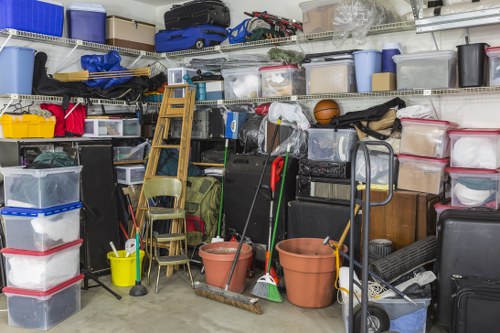
Homes often contain extra storage spaces that fill up long before the main living areas do, and these are frequently the parts people want cleared first. Lofts can hold old suitcases, seasonal decorations, boxes, paperwork and inherited items that have been left untouched for years. Garages often become repositories for tools, broken household goods, garden equipment and old furniture. Because these areas can be cramped or awkward, a methodical approach is more important than speed.
We also clear areas that contain mixed items rather than one obvious category. That might include stacked boxes, loose bags, dismantled furniture or shelves packed with miscellaneous contents. The task is usually easier when items are grouped before removal, but it can still be managed where a space is more chaotic. The main point is to decide what belongs in the clearance and what should remain, then work through the area in an orderly way.
Before the job starts, it helps to think about access, parking and any items that are especially bulky or fragile. If you can point out what is stored where, it becomes much simpler to plan the removal order. You do not need to prepare everything yourself; just give a clear picture of what is in the space and what needs to happen, and the rest can be handled in a practical sequence.
Furniture removal and bulky household items

Furniture is often at the centre of a house clearance because it is large, difficult to move and usually takes the most space in a room. Sofas, beds, wardrobes, cabinets, dining sets and shelving units may all need to go, sometimes alongside smaller household goods that have been stored inside or around them. A sensible plan accounts for how the furniture comes out, where it sits in relation to doorways and whether items need to be moved in a particular order.
Our furniture clearance page covers the removal of household furniture that no longer fits the property or the plan for the space. That can be useful when a room is being emptied before a move, refurbishment or new layout, or when just a few large pieces need taking away rather than everything in the home. Furniture clearance often works best when it is matched to the room’s remaining contents so nothing is left awkwardly stranded.
For some homes, furniture clearance and full house clearance overlap heavily; for others, they remain quite separate. A single chair, a bed frame or a wardrobe can change the whole feel of a room once removed, which is why it is worth identifying bulky pieces early. If you already know the large items that need attention, the rest of the clearance can usually be organised around them without unnecessary complication.
How clearance work is organised
House clearance is most effective when the practical steps are clear from the start. The job usually begins with identifying the rooms or spaces involved, the type of contents present and any items that should be left behind. From there, the work can be arranged in a sensible sequence so that large items, mixed contents and more delicate pieces are handled in the right order. That keeps the process steady and reduces avoidable disruption.
Useful information usually includes the number of rooms, the presence of stairs or tight access, and any items that are particularly heavy, fragile or difficult to move. You do not need a perfect inventory, but a simple outline helps to shape the visit. If photographs are available, they can be helpful when describing fuller rooms or storage spaces, though they are not the only way to explain what needs doing.
When the plan is clear, the clearance can focus on three practical questions: what is being removed, what stays in place and what needs special handling. That keeps the service grounded in the property itself rather than in generic assumptions. It also allows the work to be matched to the home, whether the job is a single-room clear-out or a more comprehensive domestic clearance across multiple areas.
Pricing, quotations and practical factors
House clearance pricing is typically shaped by the size of the job, the type of contents involved and the access conditions at the property. A larger clearance may take more time and require more sorting, while a property with difficult stairs, limited parking or a more awkward layout can add complexity. The mix of furniture, general household items and storage contents also matters, because different items can need different handling.
If you are comparing options, it helps to think in terms of the overall scope rather than only the visible volume of items. A room with light contents may be straightforward, while a smaller space packed with boxes and bulky pieces can take more work. The best quotation is usually based on a clear description of the property, the rooms involved and any items that need special attention. That gives a more useful starting point than guessing from size alone.
To make a quotation request more efficient, keep the description simple and factual:
- which rooms or storage areas are included
- what main furniture pieces or bulky items are present
- whether the property is fully or partly occupied
- any access details that may affect loading or removal
Recycling and responsible handling

Many house clearances produce a mixture of reusable items, recyclable materials and general waste, so responsible handling is an important part of the work. Contents do not all follow the same route once they leave the property, and a sensible clearance should reflect that. Furniture, small household goods and mixed materials often need to be separated according to what can be reused, recycled or disposed of in the most suitable way available.
Our recycling and sustainability page explains the approach to materials that can be kept in circulation or directed away from disposal where appropriate. For customers, this matters because a clearer understanding of the process helps show how different types of household contents are handled. It is especially relevant where a home contains a wide mixture of furniture, household items and stored belongings rather than a single category of waste.
Clearance work also benefits from a practical view of what is being removed. Some items are straightforward, while others may need to be sorted with more care because of their condition, material or size. A good plan avoids treating everything as identical and instead gives each group of items a sensible destination. That approach is both orderly and easier to explain to the customer.
About Chalfont Saint Giles
Chalfont Saint Giles is a village in Buckinghamshire, set within the Chiltern Hills and known for its traditional village centre, historic buildings and green surroundings. The settlement is often associated with the River Misbourne, which runs through the wider Chalfonts area, and with the lower-lying chalk landscape that shapes much of the local environment. Its village character is reinforced by a compact centre, residential streets and a pattern of lanes and footpaths that connect the core with nearby countryside. St Mary’s Church, with its prominent tower, is one of the best-known landmarks and reflects the long ecclesiastical history of the parish. The village also has a strong literary association through Milton’s Cottage, where John Milton lived for a period in the seventeenth century, and which remains a notable heritage site. Local open spaces and commons contribute to the rural feel, while the surrounding Chiltern landscape gives the area its wooded edges, seasonal views and sense of separation from larger towns. Although Chalfont Saint Giles is comparatively small, it sits within a broader network of Buckinghamshire settlements that have retained distinct identities despite modern travel links. That combination of historic fabric, village greens, conservation interest and countryside setting gives the place a character that is both residential and carefully rooted in its past.
House clearance for property changes
There are many reasons people arrange a house clearance, and not all of them involve the same kind of property. Some jobs are linked to a move, where the aim is to clear unwanted contents before handing over the keys. Others arise when a home has been left with furniture and belongings that need sorting before sale, renovation or reoccupation. In each case, the practical outcome is similar: the property needs to be made more manageable by removing agreed items in an orderly way.
We also work with households that need a careful, measured pace rather than a rushed clear-out. That can matter when family members are deciding what should stay, what should be relocated and what should leave the property. A well-managed clearance gives space for those choices to be made clearly, without turning the process into a series of ad hoc decisions. The work is then carried out in line with the agreed plan and the property’s existing layout.
If you are gathering details for a quotation, think about the overall purpose of the clearance as well as the rooms involved. A property being prepared for sale may need a broader approach than a home where only selected items are to be removed. Request a quotation when you are ready and give a brief outline of the rooms, contents and access so the job can be assessed properly.
Making the process straightforward

A good house clearance service is not only about removing items; it is also about keeping the process understandable. The clearer the scope, the easier it is to work through the home without confusion about what is staying and what is going. That matters in properties with mixed contents, long-term storage or several different room types, where the clearance needs to respect both the practical layout and the contents within it.
Our approach is centred on sensible domestic work rather than unnecessary complication. We clear homes, assist with household furniture and manage storage-heavy spaces in a way that suits the property. If there are specific pieces, rooms or access points that need attention, they can be included in the plan from the start. If not, the job can be kept broad and straightforward. That flexibility is often what makes a clearance feel manageable.
For the simplest next step, make a short note of the rooms involved and the main items to be removed, then see pricing and quotes if you want to understand the quotation process before you enquire. If you are ready to move on, ask for a quote in plain terms and we can take it from there.