Hazardous Waste Disposal Rules Chalford and Gloucestershire: A Practical Local Guide
If you are trying to make sense of hazardous waste disposal rules Chalford and Gloucestershire, you are probably dealing with something awkward, messy, and a bit worrying. Old paint tins in the shed, leftover chemicals after decorating, a leaking battery, a broken fluorescent tube, maybe a rusting container in the garage that you have been meaning to sort for months. It is one of those jobs that looks simple until you realise there are rules, risks, and the very real possibility of doing the wrong thing.
This guide explains what counts as hazardous waste, how disposal usually works in Gloucestershire, what good practice looks like in and around Chalford, and how to avoid the common mistakes that cause delays, extra cost, or worse. It is written for ordinary householders, landlords, tradespeople, and businesses who want clear answers without legal waffle. And yes, some of this is a bit less straightforward than chucking out a sofa. Life would be easier if everything went in one black bag.
- Why hazardous waste disposal matters
- How disposal works in practice
- Key benefits and practical advantages
- Who this is for and when it makes sense
- Step-by-step guidance
- Expert tips for better results
- Common mistakes to avoid
- Tools, resources and recommendations
- Law, compliance, standards and best practice
- Options, methods and comparison
- Case study or real-world example
- Practical checklist
- Conclusion
- Frequently asked questions
Why Hazardous Waste Disposal Rules Chalford and Gloucestershire Matters
Hazardous waste is not just a technical label. It is a safety issue, an environmental issue, and often a compliance issue too. In plain English, it is waste that can harm people, animals, property, or the wider environment if it is stored badly, moved incorrectly, or mixed with ordinary rubbish.
In Chalford and across Gloucestershire, the practical challenge is the same as it is anywhere in the UK: households and businesses often accumulate materials over time without really thinking about the end point. A garage fills up. A renovation throws up paint, sealants, aerosols, and adhesives. An office replaces printers and batteries. A garden project leaves behind pesticides or treatment products. Then suddenly you have a stack of items that should not be treated like normal waste.
Why does the rule set matter so much? Because hazardous waste can contaminate other loads, create fire risks, injure handlers, and cause problems at disposal or recycling facilities. One wrongly packed item can affect an entire collection. That is not drama. It is just how waste systems work.
Expert summary: If waste is harmful, reactive, corrosive, flammable, toxic, or contains regulated substances, do not assume it can go out with ordinary rubbish. Identify it first, separate it carefully, and use the right route for disposal.
If you are also sorting larger clearances at home, it may help to look at the practical side of wider waste handling too, such as waste removal and recycling and sustainability, especially where mixed items need separating before collection.
How Hazardous Waste Disposal Rules Chalford and Gloucestershire Works
The exact process depends on what the waste is, who produced it, and how much there is. But the general flow is fairly consistent.
1) Identify the waste type
Start by working out whether the item is actually hazardous. Common examples include:
- solvents, thinners, and paint stripper
- leftover paint, varnish, and wood treatment products
- pesticides and weed killer
- batteries and some electrical items
- fluorescent tubes and certain lamps
- gas canisters and pressurised containers
- engine oil, fuel, and oily rags
- chemicals from workshops, garages, or cleaning cupboards
- asbestos, which needs especially careful handling
Labels matter here. If a product has hazard symbols, warning words, or specific storage cautions, take those seriously. A quick read of the container can save a lot of trouble later.
2) Keep it separate
Hazardous items should be separated from general waste and often from each other. Do not tip liquids together unless you are sure they are compatible. Do not put old chemicals into random tubs. And please do not mix unknown substances because you are trying to be efficient. That is usually where the problems begin.
3) Store it safely until collection or drop-off
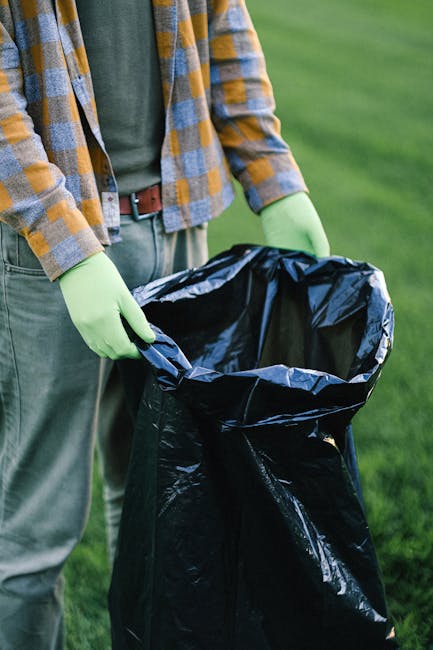
Temporary storage should be stable, dry, secure, and away from heat or direct sunlight where relevant. Keep lids tight, labels visible, and containers upright. If an item is damaged, contain it before it spreads. A simple tray or sealed secondary container can be useful for small leaks. Nothing fancy. Just sensible.
4) Use the right disposal route
In practice, disposal may involve a licensed waste carrier, a specialist collection, or a council-run or authorised disposal route for certain household hazardous items. For businesses, the paperwork and duty of care are especially important. For homeowners, the main point is still the same: use a route that can legally accept the waste.
If the waste is part of a larger property clearance, services such as house clearance, home clearance, or garage clearance can help separate bulky non-hazardous items from the materials that need special handling.
5) Keep records where required
Businesses in particular should keep paperwork, transfer notes, and carrier details as appropriate. That is part of showing that waste has gone where it should go. For domestic users, good records are still useful if you need to prove what was collected, especially after a renovation or a tenancy changeover.
Key Benefits and Practical Advantages
Following hazardous waste disposal rules is not just about avoiding trouble. It makes the whole process smoother and often cheaper in the long run. Strange as it sounds, a bit of planning usually saves time later.
- Safety: reduces fire, chemical, and contamination risks in your home or workplace.
- Cleaner collections: correctly sorted waste is easier to handle and less likely to be rejected.
- Less disruption: one organised clear-out beats several stressful, half-finished attempts.
- Better compliance: especially important for landlords, trades, and businesses.
- Environmental protection: hazardous substances are less likely to enter soil, drains, or mixed waste streams.
- Reduced liability: good handling reduces the chance of accidental damage or a reportable incident.
There is also a practical comfort factor. Once the awkward items are gone, a loft, garage, or store room suddenly feels usable again. The room smells different too, in a good way. Less stale paint, less oily dust, less "I'll deal with that next month."
Who This Is For and When It Makes Sense
This topic matters to a surprisingly wide group of people in Chalford and Gloucestershire.
Homeowners and tenants
If you are clearing a shed, moving house, finishing decorating, or dealing with an inherited property, hazardous items often show up in places you least expect. It might be old cleaning products under the sink or a box of forgotten DIY supplies in the loft.
Landlords and letting agents
Void properties and end-of-tenancy clearances often reveal mixed waste. Sometimes there is standard furniture; sometimes there is a tin of mystery liquid from years ago. A careful sort avoids problems for the next occupier and helps keep the property ready for re-let.
Businesses and tradespeople
Offices, workshops, garages, builders, and retailers can produce waste streams that are both routine and hazardous. For these users, the issue is not only disposal but also duty of care. If your work creates hazardous waste more than occasionally, treat it as part of your normal process, not as an afterthought. The paperwork may feel dull. It matters, though.
Families handling an estate or probate property
When clearing a relative's home, you may find older products that are no longer sold or are not obviously labelled by modern standards. Be cautious. Do not open unknown containers, and do not pour anything down a drain just to get it out of the way.
When it makes sense to call a specialist
It usually makes sense when the waste is mixed, heavy, potentially dangerous, or you simply do not have a safe place to store it. It also makes sense if you are already booking a broader clearance and need the hazardous items separated properly. If you need help with mixed household items, you may also find related services like flat clearance, loft clearance, or office clearance useful when the job is bigger than one corner of the house.
Step-by-Step Guidance
Here is a straightforward way to approach hazardous waste without making it harder than it needs to be.
- Make an initial sweep. Walk through the room, garage, or site and separate anything that looks chemical, pressurised, oily, or otherwise risky.
- Read the labels carefully. Look for hazard symbols, warnings, and storage instructions. If the label is missing, be extra cautious.
- Group similar items together. Keep paints with paints, oils with oils, batteries with batteries, and so on. Do not mix unknown substances.
- Decide what needs specialist handling. Some items may be suitable for a dedicated collection; others may need a controlled drop-off route.
- Package items securely. Use sealed, upright containers and make sure anything leaking is contained.
- Ask about accepted materials before booking. If you are using a removal service, check what they can take and what must be excluded.
- Keep documentation where needed. For businesses, retain waste transfer details. For households, keep a simple note of what went and when if it helps.
- Do a final check. Make sure no residues, aerosols, or forgotten containers are left behind.
That final check is where a lot of people trip up. It is amazing how often a cupboard still contains two half-used cans and a loose battery or three. A small pause saves a second trip.
Expert Tips for Better Results
Over the years, the simplest jobs are often the ones done best with a little discipline at the start. A few practical habits make hazardous waste disposal much less stressful.
Keep one "do not mix" zone
Whether you are clearing a home or a workspace, create one clearly marked area for anything questionable. That stops items being accidentally thrown together. It also helps anyone else in the property understand what should be left alone.
Photograph the labels before moving items
It sounds small, but it helps. If a container leaks, gets damaged, or loses its label, you still have a record of what it was. Handy when you are dealing with a busy clear-out and can't remember which tin was which.
Deal with liquids early
Liquids are usually the trickiest items. They can leak, spread, and contaminate cardboard, soft furnishings, or other waste. If you spot a bottle of solvent or old cleaning fluid, move it into the priority pile before the rest of the room gets packed up.
Be careful with "empty" containers
Empty does not always mean harmless. A can that still smells strongly of solvent or a pressurised container that hisses when moved may still require special treatment. If you are unsure, treat it as if it matters - because it probably does.
Use a broader clearance strategy for mixed jobs
If hazardous waste is only one part of a larger clean-up, it is often more efficient to plan the whole clearance in stages. Bulky safe items can be handled together while the risky materials are separated and dealt with properly. Services like furniture disposal and furniture clearance can sit alongside that wider plan, provided everything is sorted appropriately.
Common Mistakes to Avoid
Most problems with hazardous waste come from a fairly small list of avoidable mistakes. The good news is that once you know them, they are easy enough to spot.
- Mixing unknown chemicals: never do this. It can create fumes, heat, or worse.
- Dumping liquids into sinks or drains: this can damage plumbing and contaminate water systems.
- Ignoring old labels: if a tin says flammable or corrosive, believe it.
- Using general waste for specialist items: this can lead to rejected loads or safety incidents.
- Storing items in unstable places: stacked containers in a hot shed or damp garage are asking for trouble.
- Forgetting hidden items: batteries in drawers, bulbs in cupboards, and half-used products in cupboards are all easy to miss.
- Assuming one rule fits all: household waste, trade waste, and business waste are not treated the same way.
One especially common issue is "just put it with builders' waste." That is fine for the right kind of rubble or inert debris, but not for chemicals, oils, or contaminated packaging. If your project includes renovation debris, a dedicated route such as builders waste clearance can help separate the non-hazardous stream from anything that needs specialist attention.
Tools, Resources and Recommendations
You do not need a shed full of specialist kit to deal with hazardous waste responsibly. A few simple tools are enough for most domestic and light commercial situations.
| Tool or resource | What it helps with | Why it matters |
|---|---|---|
| Sturdy boxes or trays | Containing bottles, tins, and small items | Reduces leaks and keeps items upright |
| Permanent marker | Labelling unknown or grouped items | Prevents confusion during sorting |
| Disposable gloves | Basic handling of dusty or contaminated items | Improves hygiene and reduces skin contact |
| Camera or phone notes | Recording labels before moving items | Useful if containers are damaged later |
| Separate storage area | Keeping hazardous waste away from general rubbish | Supports safer handling and quicker collection |
My practical recommendation? Keep a small "special waste" corner wherever you are clearing out. Nothing elaborate. Just one dry, secure place where questionable items are put and left alone until they are dealt with properly.
If the job is commercial, business waste removal is worth reviewing because it can help you separate regular operational waste from items that require tighter control. For businesses that care about process and presentation, the site's health and safety policy, insurance and safety, and about us pages also help build confidence that the work is being handled seriously.
Law, Compliance, Standards, or Best Practice
For hazardous waste, compliance is not about box-ticking for the sake of it. It is about traceability, safe handling, and making sure waste ends up in the right place. UK waste law and local operating practice generally expect waste to be stored, described, transported, and handed over responsibly. The exact obligations depend on whether you are a household, landlord, tradesperson, or business.
For businesses, the most important principles are usually:
- Duty of care: you remain responsible for the waste until it is handed to an authorised person or facility.
- Correct description: waste should be identified properly so it can be accepted and treated safely.
- Segregation: hazardous and non-hazardous waste should be kept apart where needed.
- Safe storage: do not let dangerous materials sit around in ways that create fire, leak, or contamination risks.
- Paper trail: keep transfer information where required and retain records sensibly.
For households, the legal language may be lighter, but the safety principle is the same. If it looks dangerous, smells sharp, fizzes, leaks, or is pressurised, treat it with care and use the right route.
Best practice also means using a provider that is transparent about what it can and cannot take. That transparency matters more than slick wording. A service that says "yes" to everything is usually the one to question.
Options, Methods, or Comparison Table
People often ask whether they should handle hazardous waste themselves, book a general clearance, or use a specialist route. The right answer depends on the type of waste and how much there is.
| Method | Best for | Pros | Watch-outs |
|---|---|---|---|
| Self-sorting and authorised drop-off | Small domestic quantities | Can be cost-effective; full control | Takes time; you must know what you have |
| Specialist collection | Leaking, awkward, or mixed hazardous items | Safer; less handling; more convenient | May cost more than basic disposal |
| General clearance with separation | House, flat, garage, or office clear-outs | Good for mixed jobs; efficient | Hazardous items still need separate treatment |
| Trade or business waste route | Ongoing commercial waste streams | Structured process; records and compliance support | Requires correct classification and documentation |
If you are already planning a room-by-room tidy-up, it can be sensible to combine the non-hazardous parts with services like loft clearance, garage clearance, or garden clearance, while keeping chemicals and other risky materials in their own lane. That is usually the cleaner, calmer approach.
Case Study or Real-World Example
Here is a realistic example from a typical property-clearance situation in Gloucestershire. A homeowner was clearing a garage after years of gradual build-up. There were old decorating tins, a half-used garden chemical, a box of dead batteries, an oily rag bundle, and a few broken light fittings. Nothing dramatic at first glance, but enough to complicate a standard waste load.
The first step was to pause the clearance and sort the items into separate groups. The batteries were boxed together. The oils and chemicals were kept upright and apart from anything absorbent. The rag bundle was isolated rather than stuffed in with cardboard. The rest of the garage contents - shelving, old tools, worn storage boxes, and broken general items - could then be handled as a normal clearance.
That approach saved time because the non-hazardous waste did not get contaminated. It also reduced stress. The homeowner had expected a long, messy day, but once the risky items were identified, the rest of the job moved quickly. Not glamorous, admittedly, but very effective.
The same pattern shows up in offices too. A small business clearing out a store cupboard may find printer cartridges, backup batteries, cleaning products, and old bulbs mixed in with files and packaging. Once separated, the clearance becomes far more manageable.
Practical Checklist
Use this checklist before you move, store, or hand over hazardous waste.
- Have I identified all likely hazardous items?
- Are liquids, chemicals, and batteries separated from general waste?
- Are containers sealed, upright, and clearly labelled?
- Have I checked for leaks, odours, or damaged packaging?
- Do I know which items need specialist disposal?
- Have I kept hazardous waste away from heat and moisture?
- If this is a business, have I kept the necessary records?
- Have I avoided mixing unknown substances?
- Is the collection route suitable for the type of waste I have?
- Have I done a final sweep for hidden items in cupboards, drawers, and shelves?
If you can tick most of those off, you are in a good place. If not, stop and re-sort. It is usually quicker than fixing a messy load later.
Get a free quote today and see how much you can save.
Conclusion
Hazardous waste disposal rules Chalford and Gloucestershire are really about three things: safety, separation, and sensible handling. Once you know what you are dealing with, the job becomes much less intimidating. The key is not to rush, not to mix unknown materials, and not to assume every waste item can travel the same route.
For a small household job, a careful sort and the right disposal route may be all you need. For a business, landlord clearance, renovation, or larger property clean-up, it is often better to combine hazardous handling with an organised wider clearance plan. That way, the messy bits stay controlled and the rest of the work gets done properly.
And honestly, once the last awkward tin or battery is dealt with, the relief is real. The room feels lighter. The job feels finished. That is usually worth the effort.
Frequently Asked Questions
What counts as hazardous waste in a home or garage?
Common household examples include paint, solvents, adhesives, pesticides, batteries, fluorescent tubes, oil, fuel, and some cleaning chemicals. If a product is flammable, corrosive, toxic, or pressurised, treat it with caution.
Can I put hazardous waste in my normal rubbish bin?
Usually, no. General rubbish is not the right route for dangerous materials. Mixing hazardous items with ordinary waste can create safety risks and may lead to rejection or contamination.
What should I do with old paint tins?
Keep them sealed if possible, check whether the contents are still liquid, and separate them from other waste. Old paint and related products often need a specialist route rather than standard disposal.
Are empty aerosol cans safe to throw away?
Not always. If a can still contains pressure or residue, it may need specific handling. If you are unsure, do not force it into general waste.
How do I store hazardous waste safely before collection?
Keep items upright, sealed, and away from heat or moisture. Separate liquids from absorbent materials and keep everything in a stable place where it cannot be knocked over.
Do businesses have different responsibilities from households?
Yes. Businesses usually have more formal duties around waste description, transfer, storage, and record-keeping. The basic safety principles are similar, but the compliance expectations are higher.
What if I do not know what a container holds?
Do not open it unless you are confident it is safe to do so. If there is any doubt, keep it isolated and seek a suitable disposal route. Unknown chemicals are best treated carefully, not guessed at.
Can hazardous waste be collected during a house clearance?
Sometimes, yes, but only if it is identified and handled separately. Many clearances can deal with the non-hazardous items while keeping the specialist waste out of the main load.
Is asbestos included in normal hazardous waste collections?
Often, asbestos needs its own specialist process. Because it presents particular health risks, it should never be handled casually or mixed with ordinary building waste.
Why might a collection be refused?
Common reasons include unknown materials, badly leaking containers, mixed incompatible substances, or waste that the collector is not licensed or equipped to accept. Clear identification prevents most refusals.
What is the safest first step if I find a box of mixed chemicals?
Stop handling them, keep them separate from other waste, and avoid pouring, combining, or transferring them into random containers. A calm, measured approach is best here.
How can I make a clearance more efficient overall?
Sort early, label clearly, and separate hazardous from non-hazardous items before collection day. If you are also clearing furniture or bulky household goods, services like home clearance and furniture clearance can help keep the wider job organised while the risky items are managed properly.
Where should I go next if I need help with a larger clearance?
Start by thinking about the type of waste you have, how much of it there is, and whether anything needs specialist handling. From there, a tailored quotation is usually the most sensible next step, especially for mixed loads and property clear-outs.